The Golden Age (1970s-1980s)
The masala genre crystallized in the 1970s when filmmakers like Manmohan Desai and Prakash Mehra created templates that would define Indian popular cinema. This era coincided with India's socio-political upheaval, and masala films offered escapist entertainment while addressing social issues through allegory.
Landmark Films of This Era:
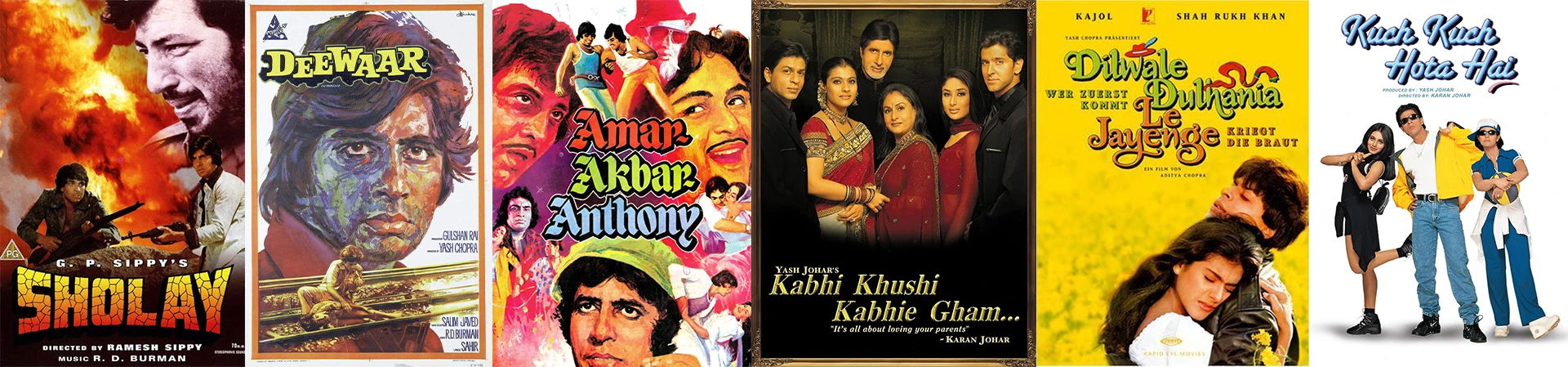
Sholay (1975): Often called the perfect masala film, it combined Western, action, comedy, and drama
Amar Akbar Anthony (1977): Manmohan Desai's secular fantasy about separated brothers
Deewar (1975): The angry young man template that influenced countless films
The Transformation (1990s-2000s)
The 1990s saw masala films becoming more polished, with bigger budgets and international locations. Family became the central theme, and NRI (Non-Resident Indian) audiences became a target demographic.
Key Examples:
Dilwale Dulhania Le Jayenge (1995): Romance-heavy masala that redefined the genre
Kuch Kuch Hota Hai (1998): Glossy production values met traditional masala elements
Kabhi Khushi Kabhie Gham (2001): The ultimate family drama masala
Modern Masala (2010s-Present)
Contemporary masala films have evolved to incorporate:
- More sophisticated action sequences
- Self-aware humor and meta-references
- Stronger female characters
- Social media age storytelling
- Regional cinema influences
Modern Examples:
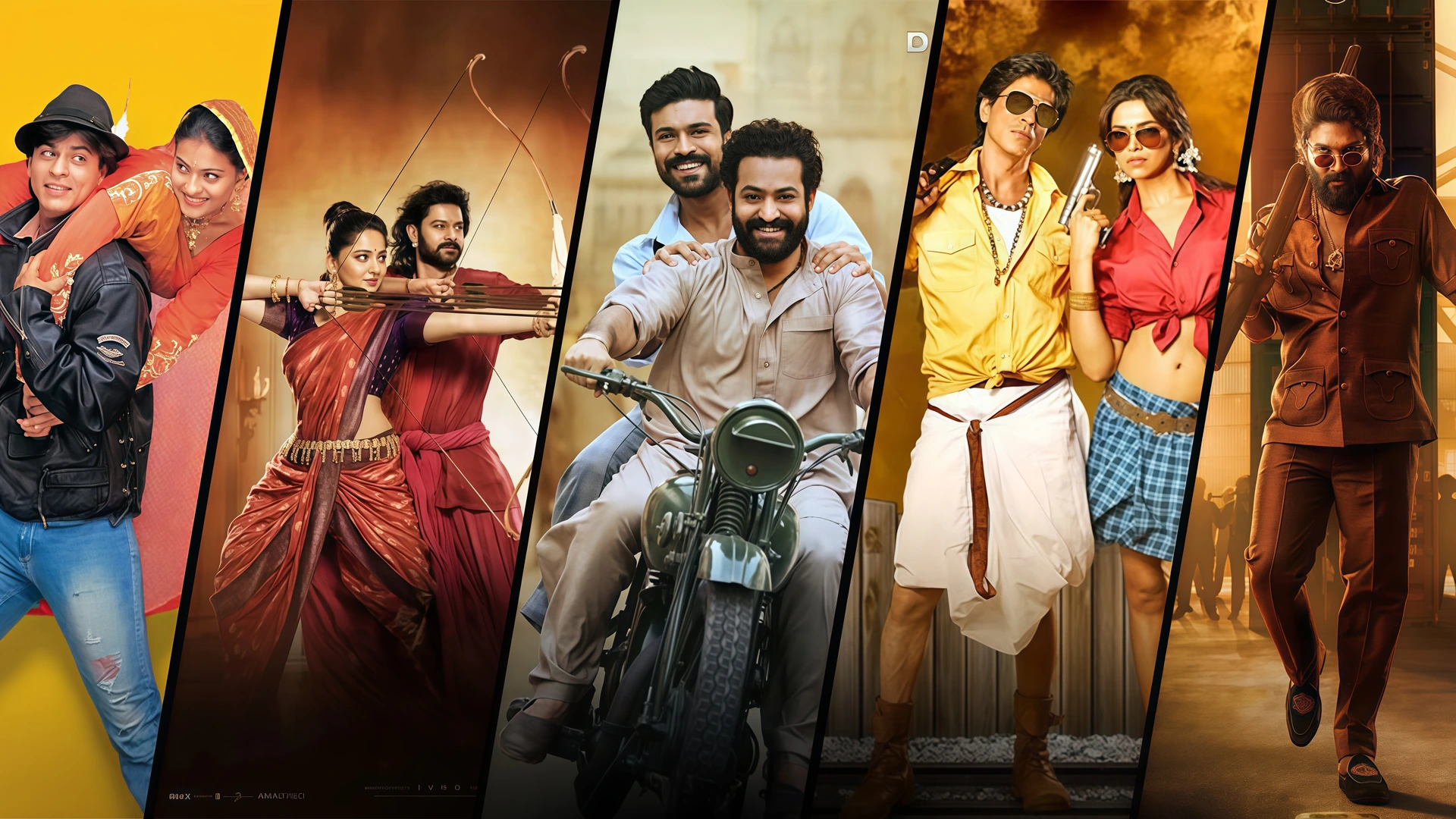
Baahubali series (2015-2017): Epic fantasy masala on an unprecedented scale
RRR (2022): Historical fiction masala that achieved global recognition
Pathaan (2023): Spy thriller masala for the multiplex age