Blog

The 12-Hour Shift Manual: Production Schedule Recalculation Guide

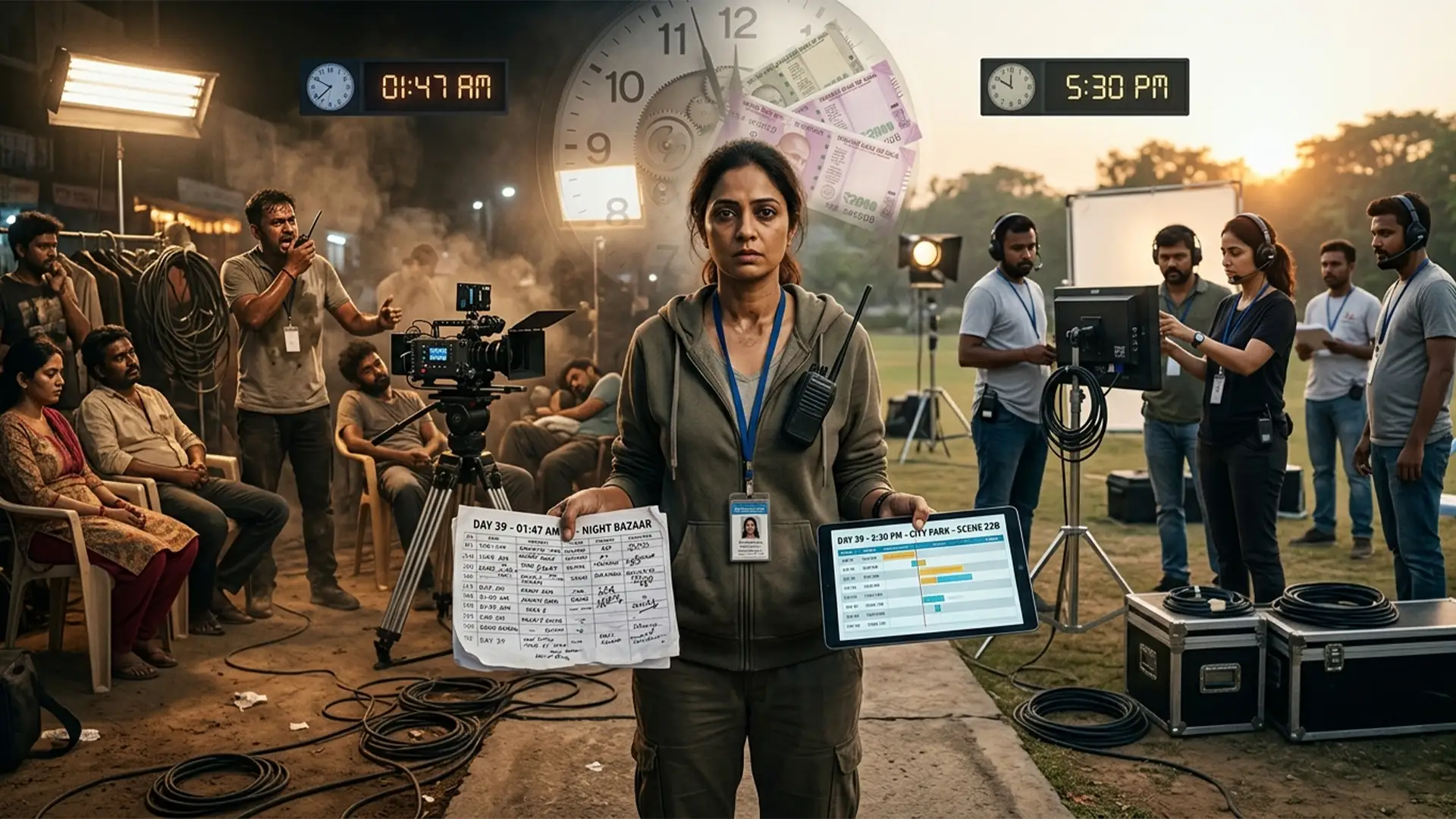
If you have spent any time on an Indian film set, you know the reality: shooting days that stretch well beyond twelve hours, exhausted crews, and budgets that spiral out of control when overtime payments pile up. The recent industry-wide conversation triggered by leading actresses demanding eight-hour shifts has put a spotlight on something production managers have quietly struggled with for decades—the hidden cost of poor schedule planning.

This guide is not about cutting corners or exploiting your crew. It is about working smarter. By understanding how Indian labour laws calculate overtime and restructuring your production schedule accordingly, you can protect your budget while creating healthier working conditions for everyone on set.

Film production manager handling schedule and overtime on set

Why This Matters Now

The Indian film industry is at a crossroads. When a prominent actress's request for reasonable working hours makes national headlines and sparks debates across regional industries—from Bollywood to Telugu and Malayalam cinema—it signals a deeper systemic issue that production houses can no longer ignore.

Beyond the ethical arguments, there is a financial reality. Under Indian labour law, specifically the Factories Act and the newer OSH Code 2020 (Occupational Safety, Health and Working Conditions Code) overtime work must be compensated at double the ordinary wage rate. For a crew of fifty working three hours of overtime daily across a thirty-day shoot, you are looking at additional costs that could fund an entire additional shooting week if planned properly.

The mathematics is straightforward: poor planning is expensive. Good scheduling saves money and keeps your crew functional throughout the production.

Understanding the Legal Framework

Before restructuring your schedule, you need to understand what triggers overtime payments under Indian law.

Standard Working Hours

The legal baseline across most Indian states is:

  • Nine hours per day maximum
  • Forty-eight hours per week maximum
  • Mandatory rest interval of thirty minutes after every five hours of continuous work

Any work beyond these limits qualifies as overtime and must be paid at twice the regular hourly rate.

The Overtime Calculation

Here is how the mathematics works. Consider a gaffer earning ₹25,000 per month, working twenty-two days with eight-hour shifts:

  • Regular hourly wage: ₹25,000 ÷ (22 × 8) = ₹142 per hour
  • Overtime rate: ₹142 × 2 = ₹284 per hour
  • Three hours of daily overtime: ₹284 × 3 = ₹852 additional per day

Multiply that across your entire below-the-line crew for a thirty-day shoot, and you begin to see why schedule optimisation is not optional—it is essential.

Quarterly Overtime Limits

Most states cap overtime at 125 hours per quarter, though some like Maharashtra and Telangana allow up to 144 hours for certain industries. Exceeding these limits exposes your production to legal penalties regardless of how much you pay.

The Twelve-Hour Shift Problem

The film industry has normalised twelve-hour shooting days. Studio rentals are quoted per twelve-hour shift. Day rates for crew are calculated assuming twelve hours. Call sheets are built around this number. But here is what many production managers overlook: a twelve-hour day already includes three to four hours of overtime.

When a director goes over that twelve-hour mark—which happens frequently on Indian productions—you enter what could be called "double-overtime territory." The crew has already worked their standard hours plus regular overtime. Every additional hour now carries not just the double-rate premium but also accumulated fatigue that affects the next day's efficiency.

The real cost is compounded. Tired crews work slower, make more mistakes, and require more takes. A scene that should wrap in two hours stretches to four. The schedule slips further. More overtime accumulates. The cycle feeds itself.

Step-by-Step Schedule Restructuring

Step One: Audit Your Script Breakdown

Start with an honest assessment of your script breakdown. For each scene, estimate not just the ideal shooting time but the realistic time including setup, blocking, multiple takes, and the inevitable problem-solving that happens on set.

A common mistake in Indian productions is scheduling based on page count alone. A two-page dialogue scene in a single location might shoot faster than a half-page action sequence with multiple camera setups. Your breakdown needs to account for complexity, not just length.

Step Two: Calculate Realistic Daily Capacity

If you want to avoid overtime entirely, your target is eight hours of actual shooting time. After accounting for breaks and setup, that translates to roughly six to seven hours of cameras rolling.

Work backwards from there:

  • Conservative estimate: Four to five pages per day
  • Maximum setups: Twenty to twenty-five per day
  • Location moves: One maximum, ideally none

If your current schedule assumes eight pages and thirty-five setups daily, you have already built overtime into your plan.

Step Three: Group Scenes Strategically

Location clustering is the single most effective schedule optimisation technique. Every company move costs you two to three hours. Eliminate unnecessary moves by:

Shooting all scenes at one location before moving, regardless of story sequence

Scheduling locations geographically to minimise travel time between moves

Using adjacent spaces within the same location for multiple scene requirements

Step Four: Build Buffer Days

The temptation on tight budgets is to schedule every day to maximum capacity. Resist it. Build one buffer day for every five shooting days. These days absorb the inevitable delays—weather, actor illness, technical problems—without pushing your primary schedule into overtime territory.

If everything goes perfectly, you finish early. More likely, those buffer days get used and your budget stays intact.

Step Five: Implement Split Shifts for Complex Days

Some days genuinely require longer hours—night shoots, magic hour sequences, or scenes with large crowds available only at certain times. For these situations, consider split shifts. Your crew works a morning block, takes a substantial break of four to five hours, then returns for an evening block.

This approach keeps total working hours within limits while accommodating production realities. The key is informing the crew in advance and ensuring the break allows actual rest—not just waiting around on set.
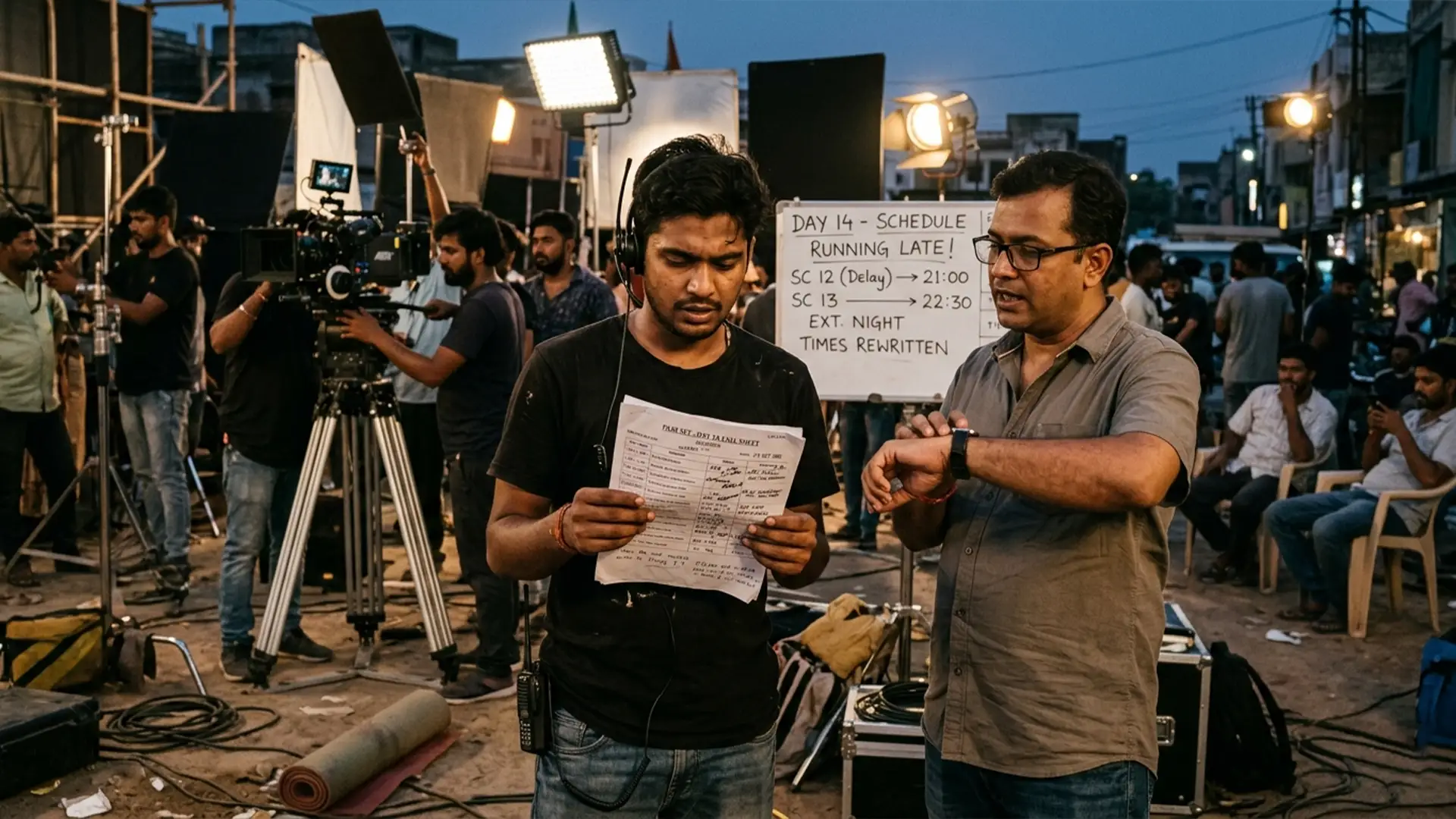
Film crew reviewing shooting schedule on set

Common Scheduling Mistakes to Avoid

Underestimating setup time. The gap between wrapping one scene and rolling on the next is where schedules fall apart. Account for lighting changes, costume adjustments, and the reality that moving a film crew is like moving a small army.

Ignoring department prep times. Your call sheet might say 7 AM, but hair and makeup needs actors two hours before cameras roll. Grip and lighting needs time before that. Work backwards from your first shot, not forwards from an arbitrary call time.

Scheduling dialogue-heavy scenes at day's end. Complex dramatic scenes require fresh actors and crew. Schedule them early. Save simpler coverage and inserts for when energy levels drop.

Not accounting for weather in outdoor shoots. Especially relevant for shoots in Kerala during monsoon or Mumbai during summer. Have backup interior scenes ready that can substitute if conditions change.

Using Technology to Optimise Schedules

The days of managing production schedules through WhatsApp groups and Excel sheets are ending. Modern production management tools can transform how you plan and execute shoots.

Visualtake represents this new approach to production management. The platform allows you to build detailed script breakdowns, automatically flag scheduling conflicts, and track crew hours in real-time. When your gaffer is approaching their overtime threshold, you know immediately—not at the end of the week when the damage is done.

What makes tools like Visualtake particularly valuable for Indian productions:

  • Automated overtime tracking calculates crew hours against legal limits, alerting you before violations occur
  • Scene clustering suggestions analyse your breakdown and recommend optimal shooting orders
  • Real-time schedule adjustments let you see instantly how moving one scene affects your entire production timeline
  • Budget impact projections show the financial consequences of schedule changes before you commit to them
  • Digital call sheets that update automatically when changes occur, eliminating the confusion of multiple WhatsApp messages with conflicting information

The transition from informal workflow management to structured digital tools is not about adding complexity. It is about making the complexity you already have visible and manageable.


A Practical Example: Restructuring a Twenty-Day Shoot

Consider a typical mid-budget Hindi feature scheduled for twenty shooting days across four Mumbai locations. The original schedule assumes twelve-hour days with an average of seven pages daily.

Original approach:

  • Twenty shooting days, twelve hours each
  • Four hours of overtime daily (beyond eight-hour baseline)
  • Eighty total overtime hours per crew member

Restructured approach:

  • Twenty-four shooting days at nine hours each
  • One hour of overtime daily maximum
  • Four buffer days absorbed into extended schedule
  • Twenty-four total overtime hours per crew member

The restructured schedule adds four days but reduces overtime hours by seventy percent. For a fifty-person crew with an average daily wage of ₹2,000, this translates to approximately ₹5.6 lakhs in overtime savings—more than offsetting the additional day costs while improving crew welfare and shot quality.

Best Practices for Schedule Management

  1. Front-load your difficult scenes. Schedule your most demanding sequences in the first two-thirds of production when energy and morale are highest.
  2. Respect turnaround times. Ensure at least ten hours between wrap and the next day's call. Tired crews compound scheduling problems.
  3. Communicate changes immediately. Use digital tools that push updates to everyone simultaneously. A gaffer who arrives expecting a 7 AM call but finds out at 6 AM it is now 5 AM will not perform at their best.
  4. Track actuals against estimates. Record how long scenes actually take versus your estimates. Use this data to improve future schedule accuracy.
  5. Plan second unit shoots. Inserts, establishing shots, and simple coverage can often be captured by a smaller second unit, freeing your main unit for principal photography.

Moving Forward

The conversation around working hours in Indian cinema is not going away. Productions that adapt now—building schedules that respect both legal requirements and human limitations—will find themselves better positioned as the industry evolves.

This is not about choosing between efficiency and ethics. Properly planned schedules deliver both. Your crew performs better when they are not exhausted. Your budget stays intact when overtime is planned rather than accidental. Your reputation as a production house improves when word spreads that your sets are professionally managed.

The tools exist. The knowledge exists. What remains is the willingness to change how we have always done things. Start with your next production. Audit your current schedule against the principles outlined here. Look for the overtime already baked into your plan. Then restructure.

The twelve-hour day does not have to be inevitable. With better planning, the same work happens in less time, costs less money, and treats the people making your film as professionals rather than resources to be depleted. That is not just good ethics—it is good filmmaking.


VisualTake film production banner with camera and spotlight