Blog

How to Streamline Film Pre-Production Workflow

Film pre-production workflow is defined as the structured process that prepares a project before shooting begins. A streamlined workflow reduces delays, prevents budget overruns, and improves output quality. Visual Take automates scripting, budgeting, scheduling, and collaboration, making pre-production faster and more reliable.

Pre-production failures cause most production losses. Poor planning leads to reshoots. Budget miscalculations increase costs. Weak communication delays execution. Inefficient scheduling misses deadlines. A structured workflow eliminates these risks and ensures predictable production outcomes.

Modern filmmaking requires digital tools, AI automation, and integrated systems. Production houses now rely on platforms like VisualTake to manage scripts, budgets, crews, and logistics in one place. This shift reduces manual work and increases efficiency across the entire pipeline.

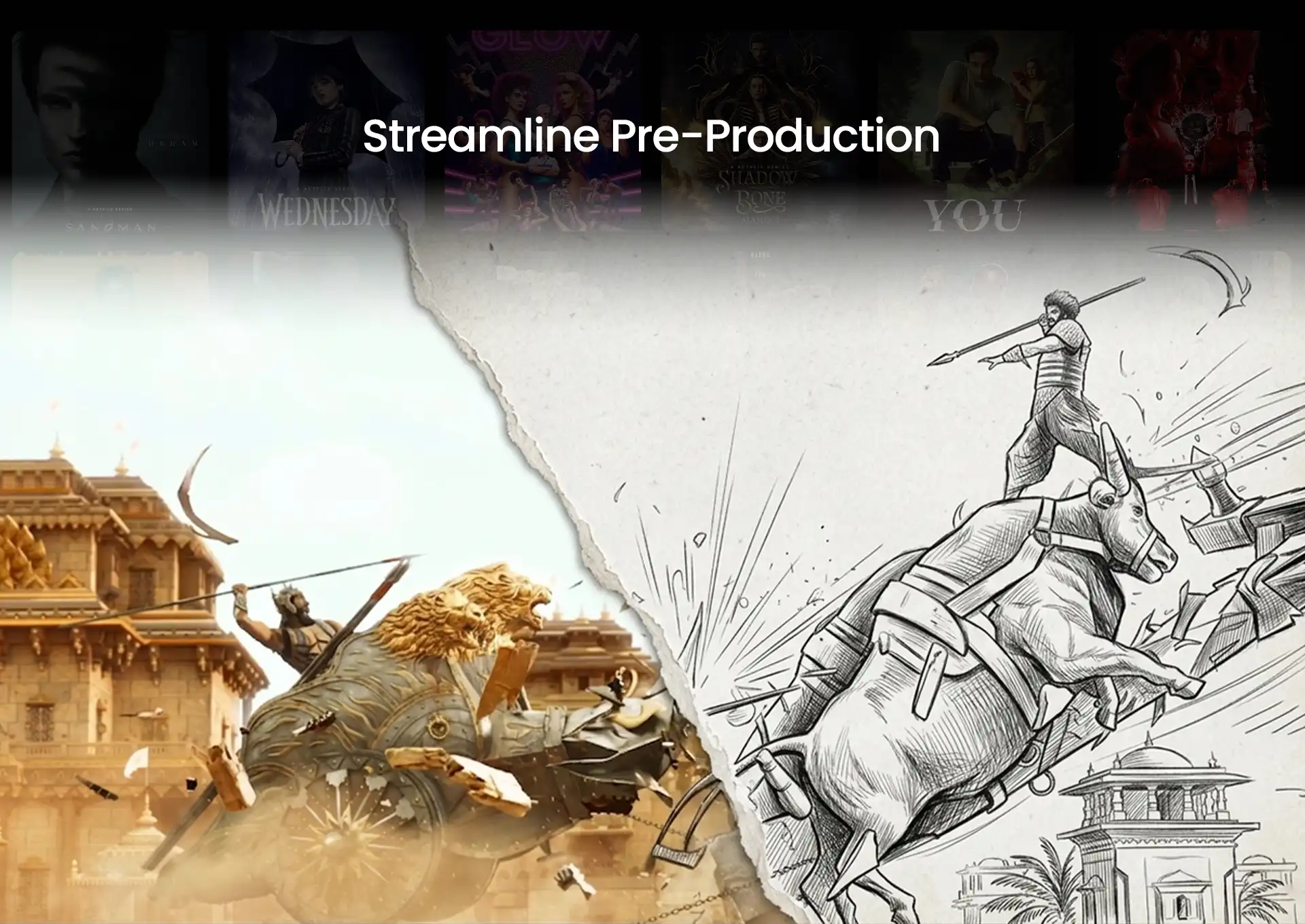
AI-powered film pre-production workflow showing storyboard sketch transforming into cinematic battle scene

What are the common problems in film pre-production?

Pre-production problems include planning gaps, budget errors, communication failures, and time mismanagement.

Planning gaps disrupt the entire workflow. Script breakdown errors affect scheduling, budgeting, and resource allocation. A single missed detail creates downstream delays.

Budget errors increase financial risk. Equipment rental, location fees, and crew costs escalate quickly. Low-budget films range from ₹16 crore to ₹40 crore (\\\\\\\$2M–\\\\\\\$5M). Every production requires a contingency fund of 10–20%.

Communication failures disconnect teams. Directors, producers, and crew operate without alignment. This causes confusion and execution delays.

Time mismanagement extends production timelines. Pre-production requires at least one-third of the total project duration. A 12-month project requires 4 months of planning.

These problems lead to budget overruns, missed deadlines, and poor-quality output.
How does script development impact pre-production?

Script development defines the entire production workflow.

Script development requires research, structured storytelling, and detailed breakdowns. Every script must identify characters, locations, props, and technical requirements.

Visual Take generates script insights using AI. It analyzes structure, predicts performance, and improves narrative quality. AI tools reduce manual effort and speed up development.

Storyboarding translates scripts into visuals. It defines camera angles, scene flow, and shot composition.

Visual Take converts scripts into storyboards automatically. This ensures visual consistency and reduces planning time.

Script clarity improves execution speed. Poor scripts increase production complexity.

How should budgeting and scheduling be managed?

Budgeting and scheduling require precision, integration, and real-time updates.

Budgeting includes equipment, locations, crew, and post-production costs. Every production must include contingency allocation.

Visual Take tracks budgets using AI-driven forecasting. It adjusts costs in real time and prevents overspending.

Scheduling defines production efficiency. It organizes shoot days, locations, and resource allocation.

Visual Take synchronizes schedules with budgets. This ensures efficient resource use and prevents delays.

Block shooting reduces costs. It groups scenes by location and minimizes travel and equipment usage.

Tech scouting validates locations. It ensures availability of power, lighting, and sound infrastructure.

Efficient budgeting and scheduling reduce production risk by 15–20%.

How do teams collaborate during pre-production?

Team collaboration requires centralized communication and structured coordination.

Casting and crew assembly define production strength. Every role must be clearly assigned.

Table reads and rehearsals align performance expectations. They improve execution quality.

Visual Take connects teams through integrated platforms. Celegram manages talent schedules and communication. Movycart connects production teams with vendors and service providers.

Centralized systems eliminate scattered communication. They improve accountability and speed.

Collaboration tools reduce delays and increase operational clarity.

How does AI improve film pre-production?

AI improves speed, accuracy, and decision-making in pre-production.

AI automates repetitive tasks. It reduces weeks of manual work in scripting, budgeting, and scheduling.

The AI in film market is projected to grow from \\\\\\\$1.4 billion in 2023 to \\\\\\\$14.1 billion by 2033. This growth reflects industry demand for efficiency.

AI analyzes scripts and predicts audience response. It improves content performance and reduces risk.

AI generates storyboards and visual concepts. It speeds up creative planning.

AI enables real-time scene analysis. It improves lighting, composition, and performance decisions.

AI reduces production costs significantly. It reallocates resources toward creative output.

How does data improve filmmaking decisions?

Data-driven filmmaking improves audience targeting and content performance.

AI analyzes audience preferences and trends. It predicts engagement and market response.

Visual Take uses intelligent marketing insights to optimize promotions. It ensures content reaches the right audience.

Data replaces guesswork. It improves decision accuracy and reduces financial risk.

How can film production become more sustainable?

Sustainable filmmaking reduces environmental impact and production costs.

Film production generates high carbon emissions. Large productions produce up to 3,370 metric tons of carbon.

Sustainability requires efficient logistics, reduced waste, and optimized energy use.

Visual Take tracks carbon footprint during production. It provides actionable insights to reduce emissions.

Netflix targets 45% emission reduction by 2030. The Amazing Spider-Man 2 saved over ₹3.3 crore (\\\$400K) through sustainable practices.

Sustainability improves both environmental and financial outcomes.

What does Visual Take do for film pre-production?

Visual Take is an AI-powered film production platform that automates pre-production workflows.

Visual Take generates scripts, storyboards, budgets, and schedules. It reduces manual work and increases efficiency.

Visual Take tracks finances and prevents cost overruns. It provides real-time updates and forecasting.

Visual Take connects teams, vendors, and talent. It ensures seamless collaboration.

Visual Take supports sustainable production through carbon tracking.

Visual Take reduces preparation time, lowers costs, and improves production quality.

Conclusion: Why is structured pre-production mandatory?

Structured pre-production is mandatory for successful filmmaking.

Unstructured workflows increase risk, cost, and delays. Structured systems ensure predictability and efficiency.

AI-powered tools like Visual Take transform pre-production into a controlled, data-driven process.

Efficient workflows improve creative output. They allow filmmakers to focus on storytelling instead of operations.

Modern filmmaking requires automation, integration, and precision. Visual Take delivers all three.

VisualTake film production banner with camera and spotlight